

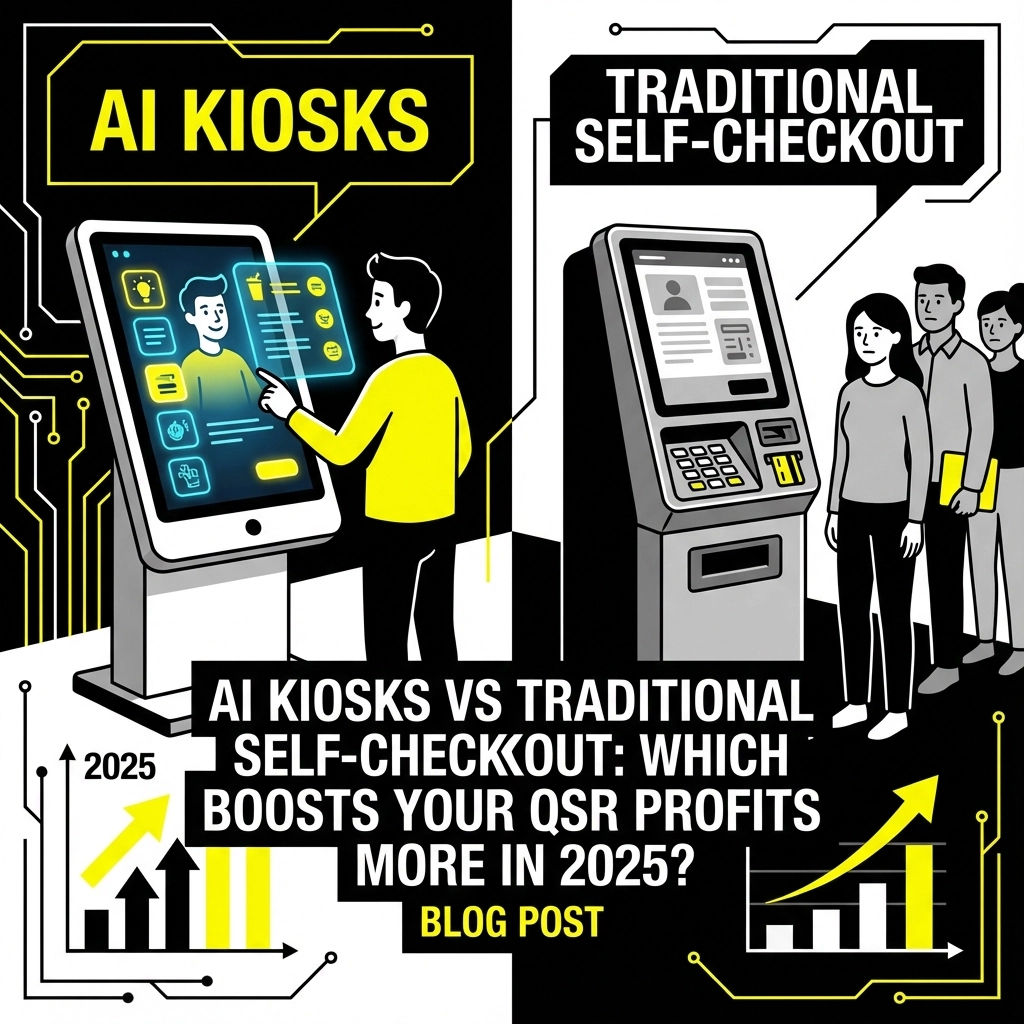


The battle for your QSR's bottom line just got interesting. While you're probably still deciding between basic self-checkout systems and AI-powered kiosks, your competitors might already be cashing in on some pretty impressive revenue boosts. Here's the thing: the gap between traditional self-service and AI-enhanced systems isn't just noticeable, it's game-changing.
Let's cut straight to what matters: your profits. Traditional self-checkout kiosks already deliver solid results, bumping average ticket sizes up by 8-15% compared to counter orders. That's nothing to sneeze at, especially when you factor in 40% faster order processing and queue reductions of 25-40%.
But here's where things get spicy. AI-powered kiosks? They're pushing those same metrics into overdrive, with average ticket increases hitting 20-30%, and some operators reporting jaw-dropping 40% sales increases. For context, that mid-sized QSR running standard kiosks might see an additional $525,600 annually. With AI enhancements, those numbers start looking even more attractive.
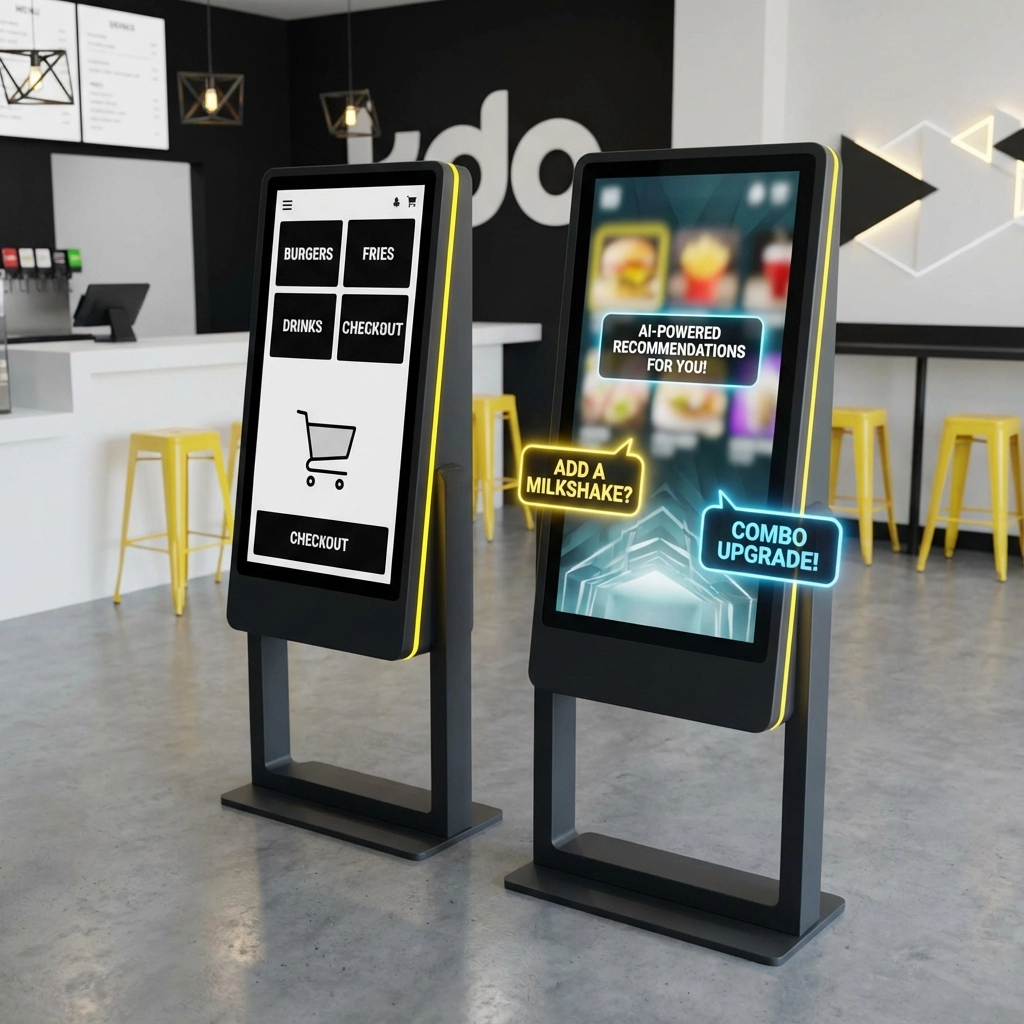
Don't get us wrong, traditional self-checkout systems aren't yesterday's news. They're handling the basics beautifully in grocery stores, convenience shops, and QSR locations nationwide. These systems excel at straightforward transactions: scan, pay, go. They're reducing labor costs, speeding up checkout times, and giving customers that quick-service experience they're craving.
For merchants in the grocery and convenience space, traditional self-checkout makes perfect sense. Customers grab their items, scan barcodes, handle payment through integrated POS systems, and they're out the door. It's efficient, cost-effective, and gets the job done.
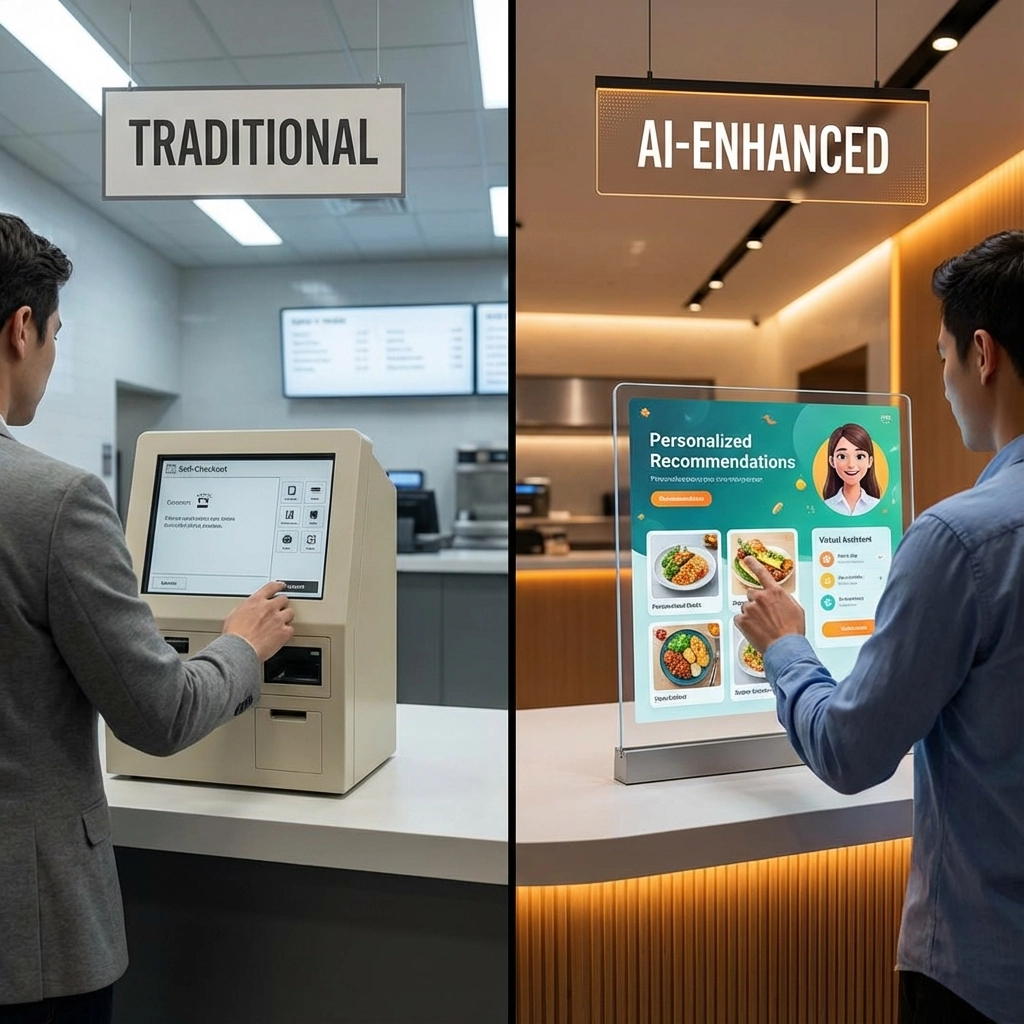
But here's the reality check: traditional systems are essentially digital cash registers. They process transactions without much finesse, missing opportunities to boost revenue through strategic upselling or personalized recommendations.
AI-powered kiosks flip the script entirely. Instead of just processing orders, they're actively working to increase your revenue per customer. Think of them as your most enthusiastic sales associate who never takes a break and remembers every customer's preferences.
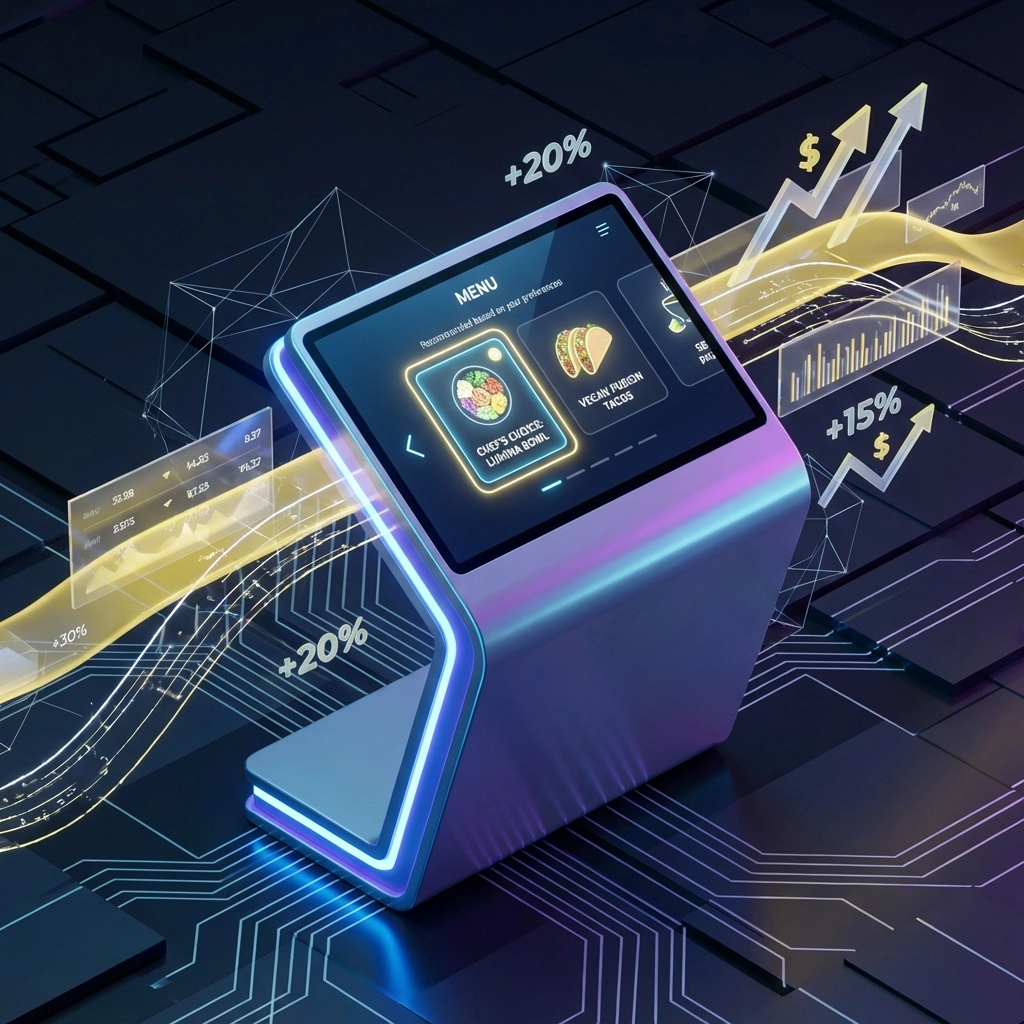
These smart systems analyze ordering patterns, suggest complementary items, and present personalized menu recommendations based on past purchases. The result? Those impressive 20-30% ticket increases we mentioned earlier aren't just lucky breaks, they're consistent performance improvements driven by intelligent upselling.
One standout example: Wendy's FreshAI drive-thru system improved service speed by 22 seconds while simultaneously boosting upsell rates. That's faster service AND higher revenue per transaction. It's the kind of win-win that gets restaurant owners excited.
Here's something interesting: 80% of customers say technology influences where they eat. That's not just about convenience, it's about expectation. Modern diners, especially Gen Z customers, actually prefer interacting with kiosks over traditional counter service for many transactions.
AI kiosks deliver on this preference by creating smoother, more intuitive experiences. Voice-activated ordering, real-time menu customization, and predictive recommendations make the ordering process feel less like a transaction and more like personalized service.
Traditional self-checkout can feel clunky by comparison. Sure, it works, but it doesn't adapt, learn, or surprise customers with relevant suggestions. In a competitive QSR landscape, that difference in customer experience can translate directly to customer loyalty and repeat visits.
Let's talk money. The self-service kiosk market is projected to hit $28.39 billion in 2025, growing at a 10.1% compound annual growth rate. That's serious expansion, and it's being driven primarily by AI-enhanced systems that deliver measurable profit improvements.
For QSR operators, the math is pretty straightforward. If traditional kiosks boost your average ticket by 8-15%, and AI systems push that to 20-30%, you're looking at potentially doubling your per-transaction profit improvement. Factor in reduced training costs (AI systems guide customers more effectively), decreased order errors, and improved customer satisfaction, and the ROI case gets even stronger.
One location reportedly doubled tips from 8% to 14% using AI technology: and that's just one metric showing how AI enhancement affects overall profitability.
The retail and restaurant tech landscape is shifting fast. Convenience stores are adopting AI-powered checkout systems to compete with larger grocery chains. QSR brands are integrating AI kiosks with their existing POS systems to create seamless omnichannel experiences.
The trend isn't just about bigger chains, either. Small and medium-sized merchants are finding that AI kiosks level the playing field, giving them access to the same personalization and upselling capabilities that previously required large customer service teams.
Cloud-based POS integration is making these systems more accessible than ever, allowing independent operators to deploy sophisticated AI checkout solutions without massive upfront technology investments.
Here's where things get practical for your business. BK Touch hardware is designed for compatibility across both traditional self-checkout and AI-enhanced systems. Whether you're starting with basic self-service or jumping straight into AI-powered solutions, our retail technology adapts to your operational needs.
Our point-of-sale accessories and digital signage solutions integrate seamlessly with both traditional and AI kiosk setups, giving merchants the flexibility to upgrade incrementally or implement comprehensive smart checkout systems from day one.
So, which system actually boosts QSR profits more in 2025? The evidence points clearly toward AI-enhanced kiosks for revenue maximization. While traditional self-checkout delivers solid operational improvements, AI systems consistently outperform in the metrics that matter most: average ticket size, customer satisfaction, and overall profitability.
That said, the best choice depends on your specific operation. High-volume convenience stores might prioritize the simplicity and reliability of traditional systems. QSR locations focused on maximizing per-customer revenue will likely see better returns from AI-powered solutions.
The key is choosing technology that aligns with your business goals while remaining flexible enough to evolve with changing customer expectations and market demands.
Whether you're leaning toward traditional self-checkout or AI-powered kiosks, the right hardware foundation makes all the difference. BK Touch specializes in retail technology solutions that grow with your business, from basic POS accessories to comprehensive smart kiosk systems.
Don't let your competitors get ahead while you're still deciding. Contact BK Touch today to explore how our compatible hardware solutions can maximize your QSR profits in 2025 and beyond. Let's build something great together.


