
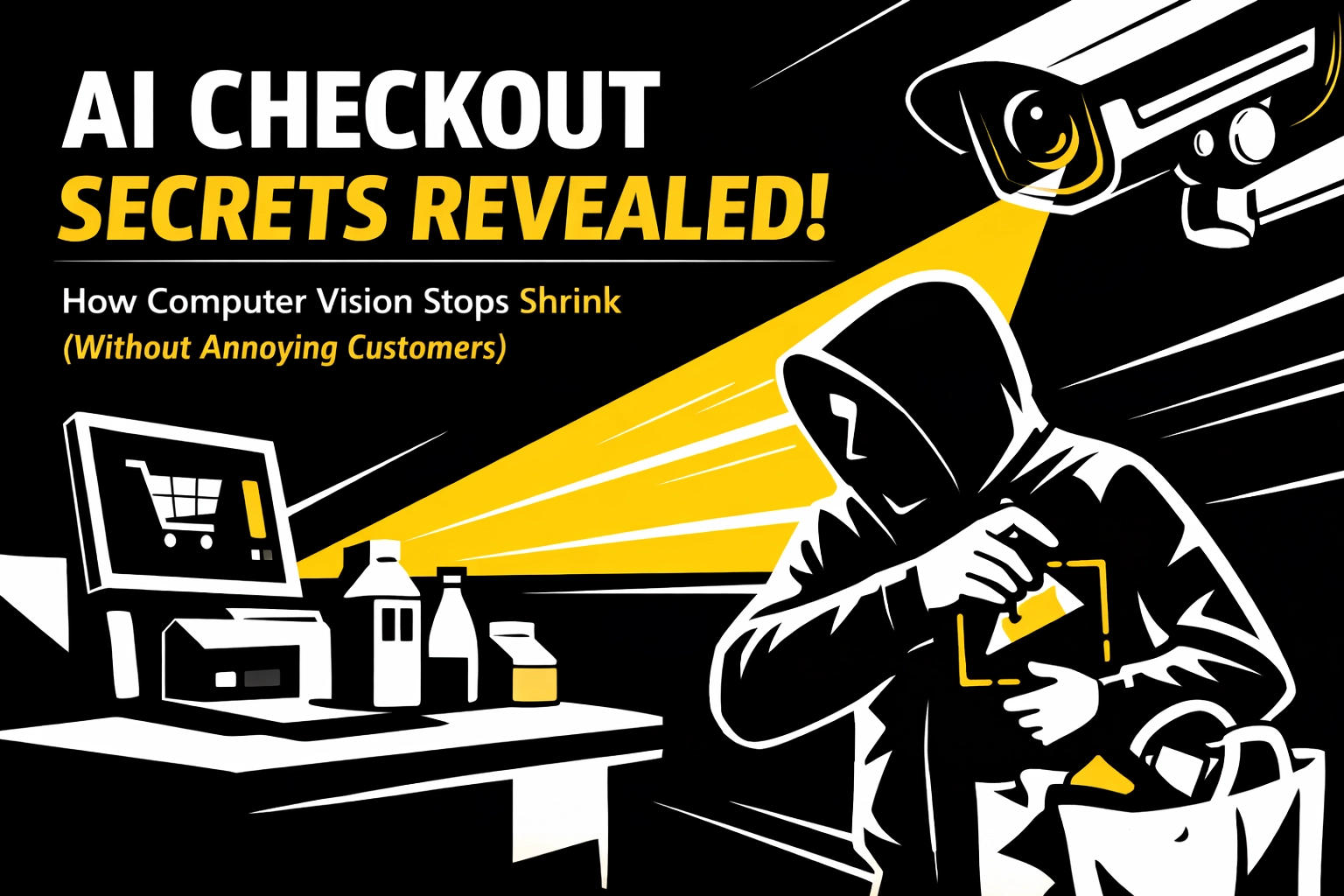


Let's talk about the elephant in the self-checkout lane: shrink. It's that four-letter word (well, six letters, but you get it) that keeps retail managers up at night. You install self-checkout kiosks to speed things up and cut labor costs, but then, surprise!, your inventory starts disappearing faster than free samples at Costco.
The traditional answer? Hovering employees, awkward "random" bag checks, and those ridiculously loud "UNEXPECTED ITEM IN BAGGING AREA" alerts that make every customer feel like a criminal. Not exactly the frictionless experience you promised, right?
Here's the good news: computer vision AI has entered the chat, and it's changing the entire game. We're talking about smart cameras that can actually see what's happening at checkout, catching both accidental mistakes and intentional "oops, I forgot to scan that" moments, without turning your store into a surveillance state that annoys legitimate customers.
Let's pull back the curtain on how this tech actually works and why it's becoming the secret weapon for retailers who want to protect profits without sacrificing customer experience.
Before we dive into the solution, let's acknowledge the scope of the problem. Self-checkout shrink comes in two flavors: the accidental kind (people genuinely forget to scan items or make honest mistakes) and the deliberate variety (customers who know exactly what they're doing when they scan organic apples as regular ones, or "forget" to scan that expensive bottle of whiskey at the bottom of their cart).
Both types hurt your bottom line. According to industry data, shrink can account for 2-4% of total sales, and self-checkout areas often see higher rates than traditional lanes. For a mid-sized grocery store doing $10 million annually, that's up to $400,000 walking out the door unaccounted for.
The old approach was to either staff every self-checkout station (defeating the purpose) or install basic weight sensors that triggered false alerts constantly. Neither option solved the real problem, and both frustrated customers to the point where they'd actively avoid self-checkout.
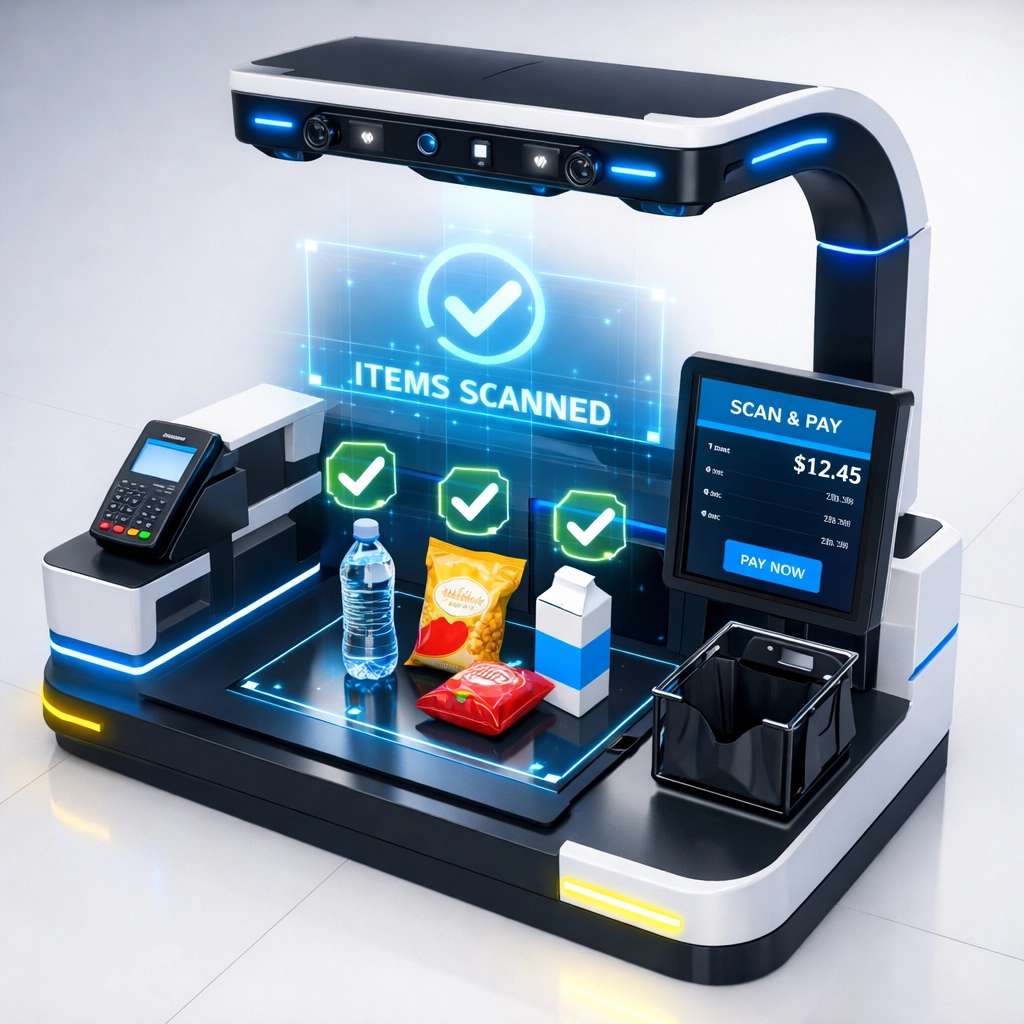
Here's where it gets interesting. Modern computer vision systems don't just detect motion or weight discrepancies, they actually recognize individual products in real-time. We're talking item-level identification that can distinguish between a can of Campbell's tomato soup and Campbell's chicken noodle, or tell the difference between premium organic strawberries and the regular variety.
The technology works by monitoring the entire checkout zone continuously. High-resolution cameras integrated into kiosks, like those available in BK Touch's self-checkout solutions, capture every movement, every angle, and every item that passes through the transaction area. Advanced AI algorithms then match what the customer scans against what the cameras actually see.
If someone scans a barcode for regular bananas but the camera identifies premium organic bananas, the system flags it instantly. If an item moves into the bagging area without being scanned at all, the AI catches it. Even partial occlusions, like when items are stacked or partially hidden, don't fool modern systems because they track products throughout the entire checkout journey.
This isn't some futuristic concept. The technology exists right now and is being deployed in stores worldwide. The key difference from older systems is the accuracy and intelligence behind the detection.
The magic happens in how these systems handle alerts. Instead of blaring announcements that embarrass customers, computer vision platforms send silent, real-time notifications directly to staff members' devices. An employee gets a subtle alert: "Station 3 - possible unscanned item" with a visual reference of what triggered the flag.
This means intervention can be immediate but tactful. In most cases, especially with accidental scans, staff can approach naturally: "Hey, I noticed the scanner might have missed that item at the bottom, let me help you ring it up real quick." Problem solved, sale completed, customer leaves happy.
The system's accuracy dramatically reduces false positives, which is crucial for maintaining customer trust. Nobody wants to be stopped every time they check out because the AI had a bad day. High-quality computer vision distinguishes between legitimate behavior and actual shrink attempts, meaning your staff only gets alerts that matter.
BK Touch's kiosk hardware is designed with integrated camera placements that capture optimal angles for AI analysis, covering the scanning area, product recognition zones, and bagging sections simultaneously. This comprehensive coverage means fewer blind spots and more accurate detection across every transaction.
You might be thinking, "Wait, stores have had security cameras forever. What's so special about this?" Fair question. Traditional security cameras are reactive, someone reviews footage after the fact, usually when inventory counts reveal a problem. By then, the shrink has already happened, and catching the culprit is like finding a needle in a haystack.
Computer vision AI is proactive and immediate. It's constantly analyzing, constantly learning, and constantly protecting your inventory in real-time. The system gets smarter over time, learning to recognize new products, adapt to different shopping behaviors, and fine-tune its detection accuracy based on your specific store environment.
Plus, it handles multiple types of shrink simultaneously:
Each scenario gets detected and handled appropriately, turning potential losses into completed transactions.
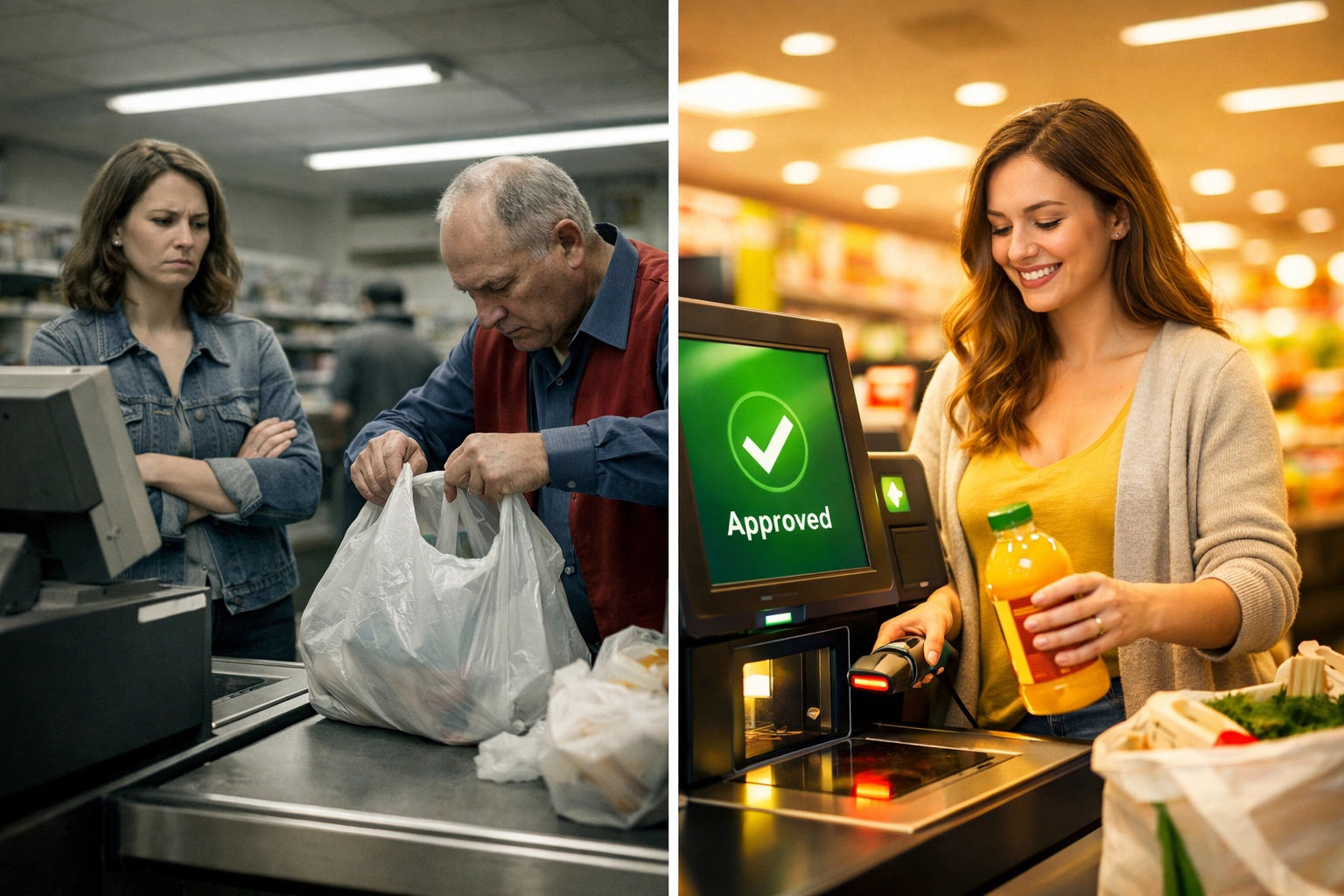
Here's what really sets modern AI checkout apart: it actually improves the shopping experience rather than degrading it. Think about it, when systems work accurately and interventions are minimal, customers move through checkout faster and with less hassle.
No more awkward weight sensor errors. No more "please wait for assistance" delays when you did absolutely nothing wrong. No more feeling like you're being watched by Big Brother just for buying groceries.
For the 95%+ of shoppers who are honest, computer vision creates a smoother, faster, more pleasant checkout process. The technology runs invisibly in the background, only surfacing when genuinely needed. That's the kind of friction-free experience that keeps customers coming back and choosing self-checkout over traditional lanes.
The real power emerges when you pair intelligent computer vision software with purpose-built hardware. BK Touch's self-checkout kiosks are engineered from the ground up to support advanced AI detection: with strategically positioned cameras, optimal lighting conditions, and processing power that handles real-time analysis without lag.
This integrated approach means retailers don't need to retrofit old equipment or jury-rig camera systems onto incompatible hardware. Everything works together seamlessly: the kiosk interface customers interact with, the scanning components, the payment processing, and the AI-powered shrink detection all operating as one cohesive system.
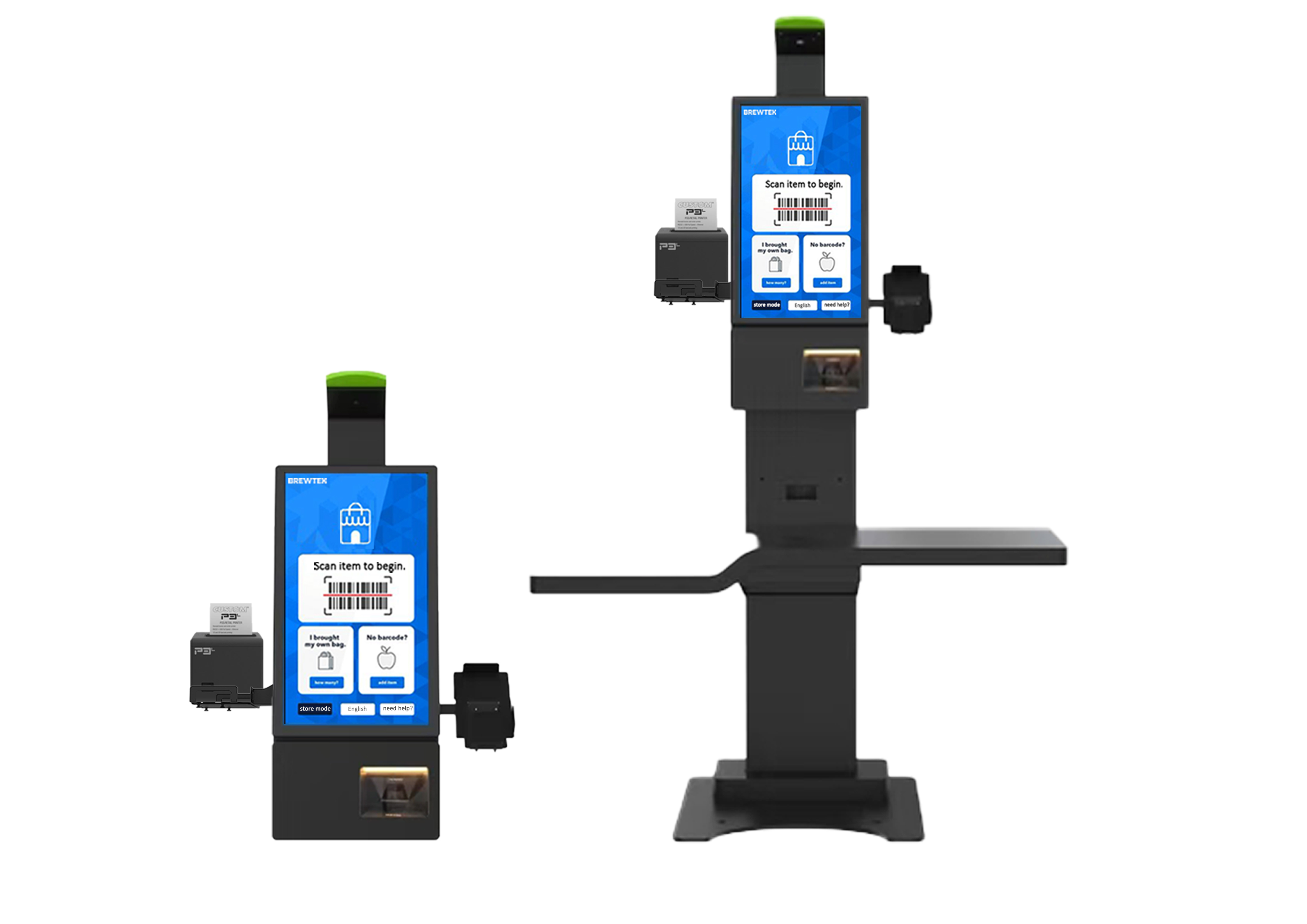
That integration extends beyond just the hardware. Modern systems can connect with your existing POS, inventory management, and business intelligence platforms: giving you comprehensive visibility into where shrink happens, when it happens, and how effectively your interventions work.
Computer vision AI isn't just about catching thieves: it's about protecting your profitability while scaling self-checkout across your operation confidently. When you know shrink is being monitored accurately and handled discreetly, you can expand self-checkout coverage without proportionally expanding your staff.
The ROI is straightforward: even reducing shrink by 1-2% in a self-checkout environment pays for the technology investment quickly, often within the first year. And unlike labor costs that recur endlessly, computer vision systems deliver ongoing protection with minimal operational overhead.
For retailers ready to embrace the future of checkout technology, the combination of smart cameras, AI analysis, and intelligent hardware represents the most effective shrink prevention strategy available today: one that protects profits without sacrificing the customer experience that drives sales in the first place.
Ready to see how AI-powered checkout can work in your store? Explore BK Touch's self-checkout solutions designed with integrated computer vision capabilities, or contact our team to discuss how loss prevention technology can transform your checkout operations without annoying a single customer.


